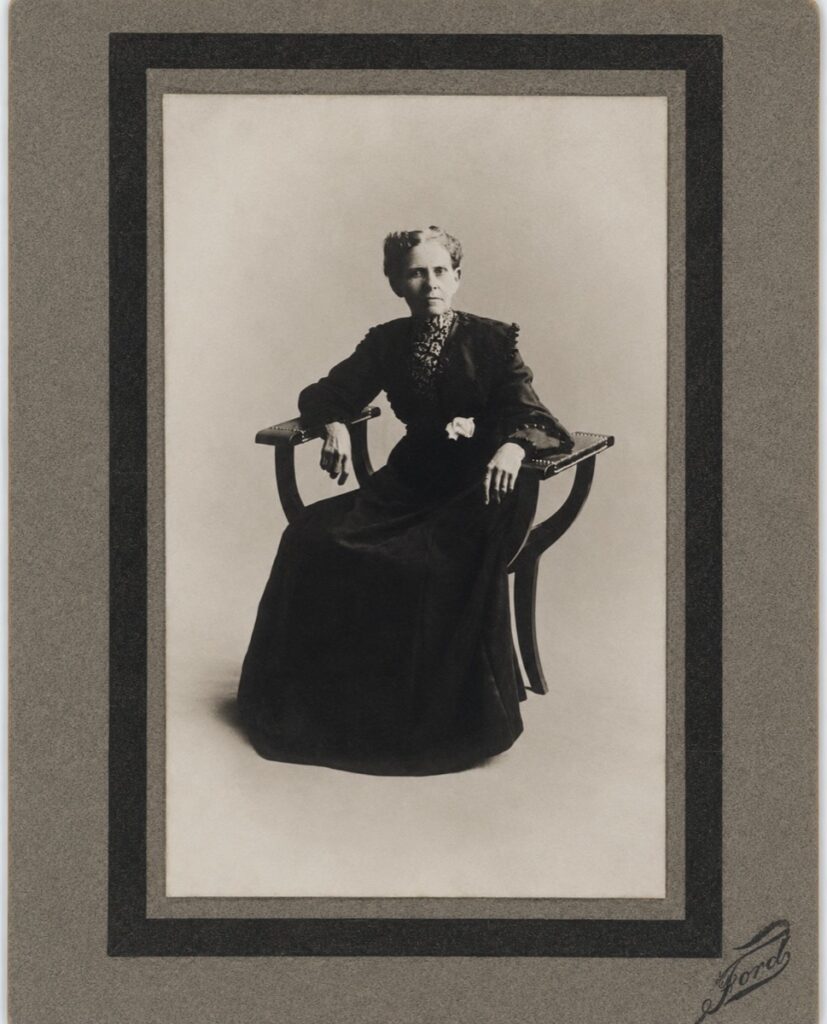
Rosile Dolley was born in 1837 and married Alvin J. Poland (1834–1914) as his second wife, Alvin having previously been married to Martha W. Pennell (1832–1864). By 1880 the couple were living in Biddeford, but by 1889 they had relocated to the West Scarborough area, near the Broad Turn School district (District No. 10). Town records reflect the family’s difficult circumstances in these final years — the 1889 Scarborough Town Report records Mrs. A. J. Poland receiving $2 in support, and Alvin receiving $14 for labor on the town farm buildings, while the 1890 Town Report notes Alvin receiving $10 worth of supplies as a recipient off the Poor Farm. Alvin filed for a Civil War pension on July 20, 1889, suggesting he was a veteran. Rosile passed away in 1890, after which Alvin is recorded as a widower living in Saco in the 1900 census. He lived until 1914. This cabinet card portrait, inscribed on the reverse “A. J. Poland, West Scarboro,” is believed to depict Rosile Dolley Poland, with the photo’s style and clothing suggesting a date of approximately 1887–1890, consistent with her final years in Scarborough.
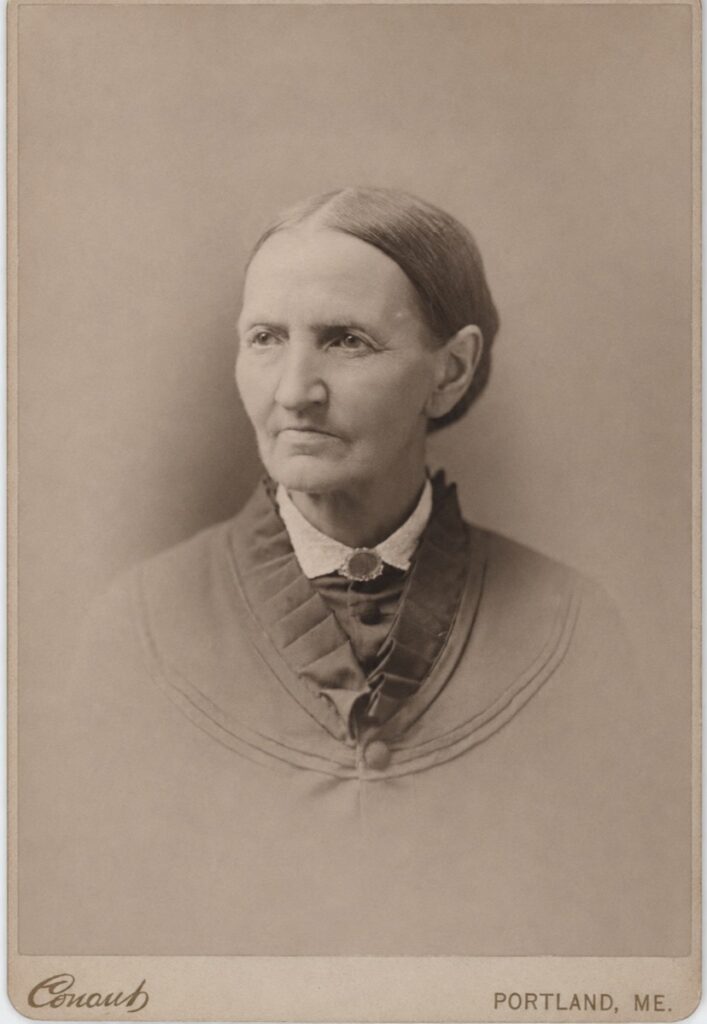
Hannah Libby Meserve was born on 13 December 1806 in Scarborough, Cumberland, Maine, the daughter of John Meserve (1767–1831) and Hannah Libby (1775–1859). On 21 November 1829, she married Charles Moulton (1801–1891), and together they raised eight children:
John B. (b. between 1831-1832)*,
Lydia M. (b. 1833),
Esther J. (1835–1908),
Mathias M. (1839–between 1903-1920)*,
Olive (1842–1926),
Charles (1844–1932),
Liberty (1848–1923), and
Fanny (b. 1851).
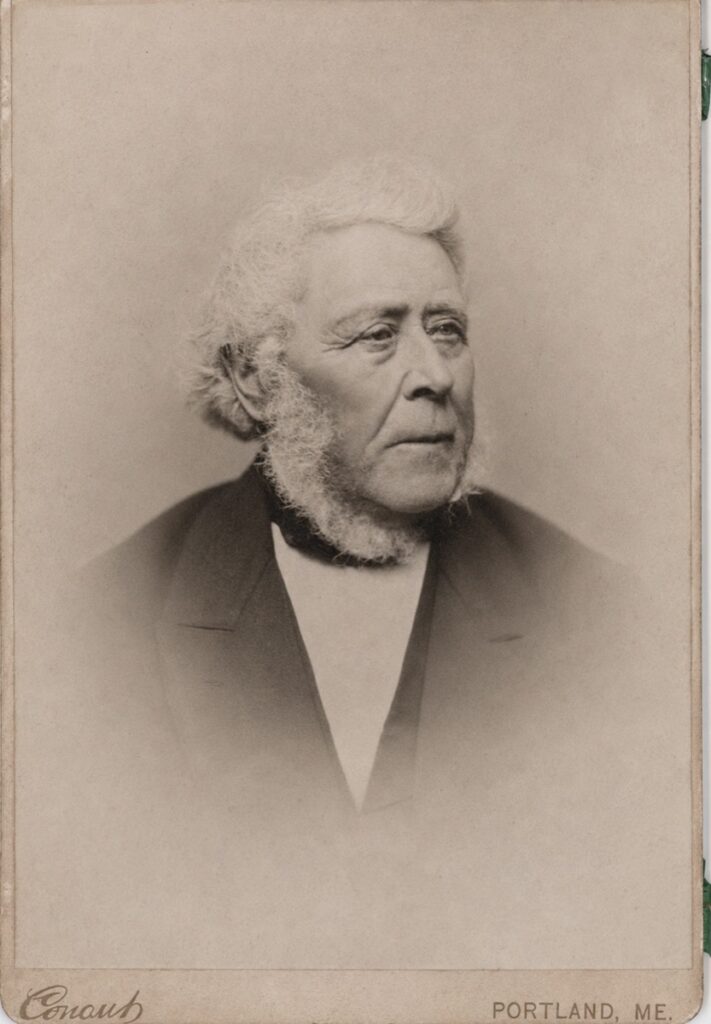
Census records show the family living in Gorham in 1850, returning to Scarborough by 1860, and back to Gorham by 1870. Hannah passed away on 17 January 1884 in Scarborough, Maine, and was buried in Portland, Cumberland County. Her husband Charles survived her by seven years, living until 1891. This cabinet card portrait, photographed by Conaut, appears to predate the portrait of her husband Charles, and is dated between 1876 and 1884 — suggesting it may have been taken while the couple were still living together in their later years, and no later than the year of Hannah’s death.
A few weeks ago, in “Why Was Superintendent Heald There? The Story Behind a 1922 School Photo,” I wrote about a North Scarborough School photograph depicting children, Mr. Heald, and several other adults. I have since come across two additional photos from that same event that are worth sharing.
The original photographs were donated to the museum twenty-five years apart by different individuals. Neither carries a date nor any identifying names. However, a close examination revealed that the adults and several of the children are wearing the same clothing as those in the previously identified photograph, which allowed me to confidently date both images to 1922.
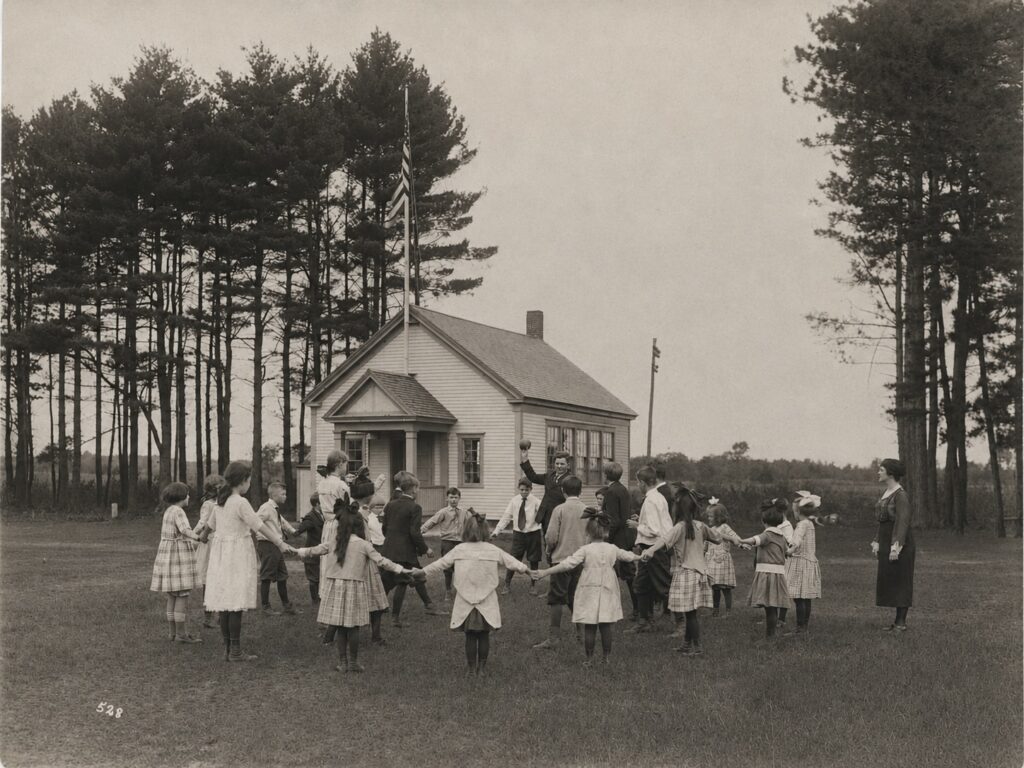
Children in a Circle: Donald Hillock stands in the center holding a ball aloft, with Lena Sherman at the far right. Remodeled North Scarborough School, 1922.
Children in a Circle: Donald Hillock stands in the center holding a ball aloft, with Lena Sherman at the far right. Remodeled North Scarborough School, 1922.
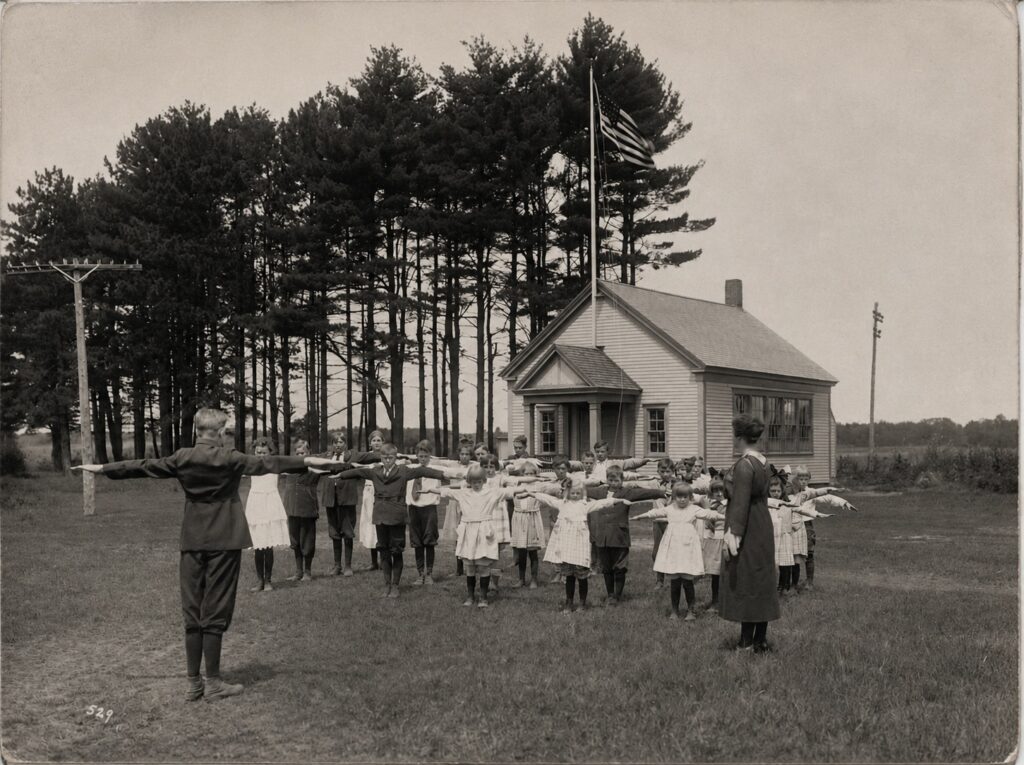
Children with Arms Outstretched: The group appears to be doing calisthenics. Donald Hillock leads the children, with Lena Sherman standing to his right. Remodeled North Scarborough School, 1922.
Conclusion
My continuing goal is to ensure these photographs are preserved, understood, and shared with future generations.
ENDNOTES
[i] All photos courtesy Scarborough (Maine) Historical Society.
Disclaimer: This article was researched and written by the author. AI photo enhancement tools were used to improve image quality, and Grammarly was used for editing.
Don Taylor, Historian Scarborough Historical Society
Charles Moulton was born in 1801, the eldest son of Captain Joshua Moulton (1775–1855) and Lydia Stone (1780–1872). Charles married Hannah Meserve (b. 1806), and together they raised a large family of eight children:
John B. (b. between 1831-1832)*,
Lydia M. (b. 1833),
Esther J. (1835–1908),
Mathias M. (1839–between 1903-1920)*,
Olive (1842–1926),
Charles (1844–1932),
Liberty (1848–1923), and
Fanny (b. 1851).
His son Mathias M. Moulton married Rose Ann Bean, and their son Willis Bean Moulton (1877–1934) married Jean S. Moulton. This cabinet card portrait, photographed by Conaut, was taken sometime between 1876 and 1891, capturing Charles in his later years. He lived to the remarkable age of 90, passing away in 1891.