A Look Inside the Classroom Over Time – Part 2

Part 2 of 4

The school system in Scarborough has seen many changes over the past 352 years. To demonstrate to you how far we have come in education, Scarborough Middle School students invite you to travel back in time to witness the evolution of a variety of things found in any Scarborough classroom today.

Extra Curricular
Danielle, grade 6

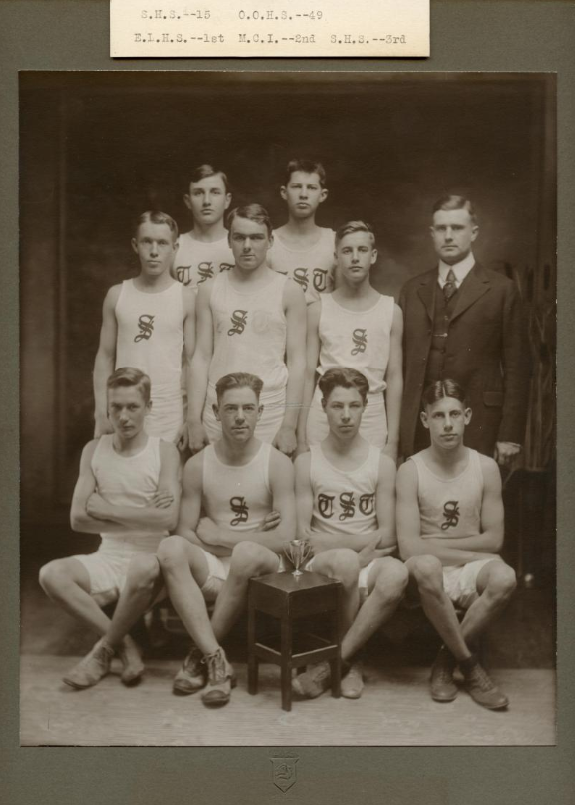
Scarborough High School Track Team, 1921

Scarborough High School Track Team, 1921

The Scarborough School System’s extracurricular activities have changed and grown since an early start. At first, the schools offered very few extra-curricular activities. One of the first few was a prize declamation which offered students a chance to compete and win prizes by singing, reading, or reciting poems or other pieces. Schools from Beech Ridge, Oak Hill, and Dunstan participated in the event, with one hundred and eighty-five people attending. By the 1920’s, the schools had formed a school orchestra, agricultural clubs, a senior fair and drama production, public speaking contest, and a girl’s club.

By the 1950’s, Scarborough’s extracurricular opportunities flourished, with student council, 4-H, a hobby club, a junior Red Cross organization, and a French Club. Many clubs competed and won awards. They had a girl’s glee club, boasting around sixty members, and a boy’s glee club, with fifteen. Thespian students could participate in one-act plays, and in the 1950’s, the high school added the Future Homemakers of America, National Honor Society, a band, and a choir. With the 1960’s came a medical club, a junior rescue organization, a ski club, pep club, future teachers of America, and a volunteer production staff.

Today, we have a wide range of sports, clubs, and activities to choose from, including student council, drama club, chess club, various music clubs and a chorus, academic extra-curricular activities, and many, many, more.

Heat
Connor, grade 6

Schools have not always had adequate heating, in fact, some schools didn’t have heat at all. In Scarborough at 350: Linking the Past to the Present, Elaine Frederick Killelea recalled the heating conditions at Black Point School in the 1930s. She said, “Each year the lavatory and drinking fountain at the front of the classroom froze in December and remained frozen until April.” Heating in schools was provided by a potbelly stove in the back of the classroom. The children closest to the heater were uncomfortably warm and had trouble fighting off drowsiness. The corners and front of the room were so cold students had to wear multiple layers of clothing and sometimes even a hat. The oldest boy was appointed the janitor and had to arrive at school early, bring in the wood or coal and keep the fire going throughout the day. In 1938 an eight grader named Harold “Scoot” Richardson was the janitor for Black Point School and according to the Scarborough Town Report he was paid $9 for the year for this service.

Today, heat in the schools is automated and overseen by the facilities director for the school department. Luckily, students are no longer required to play a role in the process of keeping the school warm.

Technology
John, grade 6

MLTI Logo - Maine Learning Technology Initiative

Maine was the first state to seize the potential of technology in classrooms.

Technology in the schools is constantly evolving. In the late 1700s, 1800s, and early 1900s, schools didn’t have computers, or high-quality projectors, or several televisions. They had to do everything by hand or with bad quality. They only had abacuses (old-fashioned calculators), stereoscopes (a hand-held viewing instrument that created three-dimensional images of landscapes, plants and animals), low-quality televisions, radios, and projectors.

Most of the technology found in schools of the past seems archaic to us. In Scarborough at 350: Linking the Past to the Present Rodney Laughton described watching a movie, “Occasionally, we saw a ‘film strip,’ similar to a slide show; watching a movie was always a big event. The teacher rolled a large, bulky projector on a cart into the classroom. The movies were reel-to-reel and usually featured newsreel type productions.” Nowadays, we have 1:1 laptop access, TVs, high-quality DVD or CD players, and LCD projectors. All of these technological tools are essential for teachers and students on a daily basis.

Discipline
Olivia, grade 6

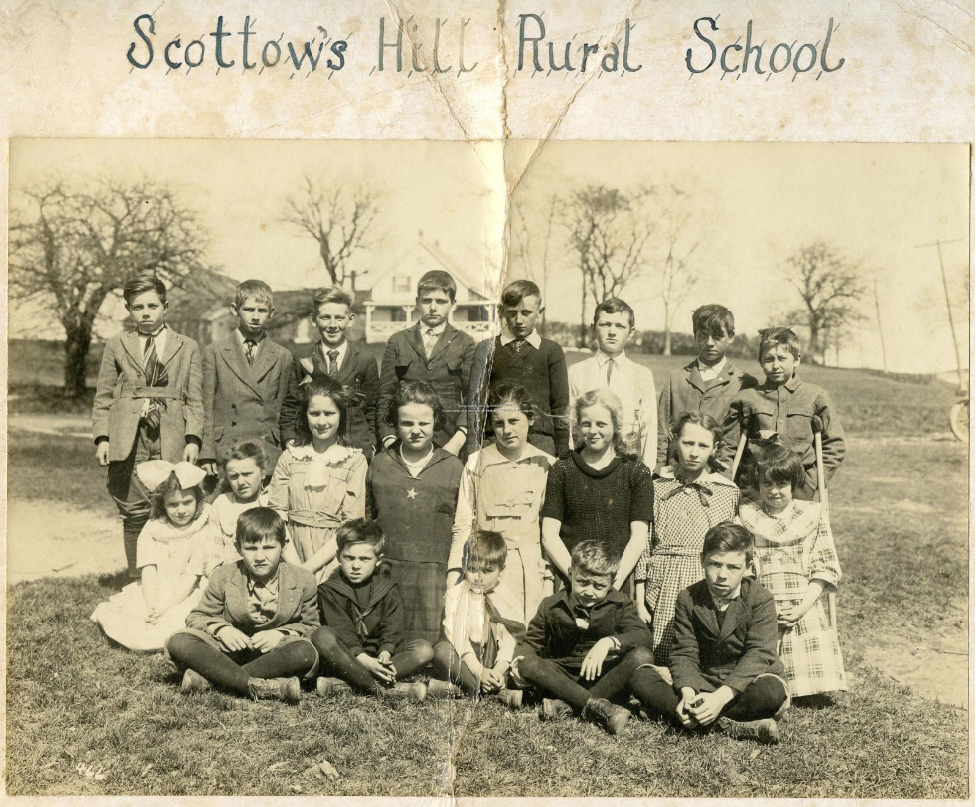
Scottow's Hill Rural School, Scarborough, ca. 1920

Scottow’s Hill Rural School, Scarborough, ca. 1920

During the 17th and 18th centuries, discipline was much different than nowadays. There were many different forms, but all resembled one another. In the early 1800s, many schools used wooden canes if a child misbehaved. Soon after in the 1850’s the leather strap and hickory switch were introduced to classrooms across the country. These tools were primarily used as motivation to behave and were often kept behind the teacher’s desk. They were there just to let children know what could happen if they needed to be taught a lesson different from what was being taught in class that day.

If children only mildly misbehaved, doing things such as disrupting class or talking out of turn, there would be a few consequences. Either their desk would be moved into the corner of the room and they would have to stay there for the remainder of the day, or they would have to stand in the corner facing the wall. If there was a problem on the playground the child who caused it would be sent in for the rest of recess. Big issues usually never arose but if they did the teachers knew how to handle them. In Scarborough at 350: Linking the Past to the Present, Rodney Laughton explained how teachers kept order at Oak Hill Primary in the 1960s. They told us to “sit up straight and fold your hands.”

Nowadays discipline is much different in Scarborough schools. Instead of physical punishment children are given punished verbally or given a written slip. Warning slips are given out for not being prepared for class, and if you were to break the rules in a bigger way you may have to serve detention. If you are mildly misbehaving a teacher may pull you out into the hall or speak at you in front of the class. Discipline has changed very much in the last 200 years, and it is still being modified slightly every year to encourage acceptable behavior.

Transportation
Andy, grade 6

Student transportation, also known as the school bus, has been very important in Scarborough for may years. At first, most students walked to school, but some students rode a bus, a bus that was very different from today’s busses. In Scarborough 350: Linking the Past and The Present Margery Miliken tells about taking the bus to Dunstan School in the 1920s.

“We had the first school bus in town, pulled by a team of horses. The conveyance, built of wood, was rectangular in shape with seats along either side facing each other. The door was in the rear and the driver seat up front. Mr. Small drove the team of two horses with the reins going out through a small opening. Fall and spring it traveled on wheels and in the winter on runners.

The number of school children riding school buses in Scarborough has risen dramatically since then and the standard yellow school bus delivers students to and from school daily. Currently, Scarborough has 29 school buses in its fleet

Part 1 Part 2Part 3Part 4

Posted in Black Point, Dunstan, Oak Hill, Schools | Tagged | Comments Off on A Look Inside the Classroom Over Time – Part 2

A Look Inside the Classroom Over Time – Part 1

Part 1 of 4

The school system in Scarborough has seen many changes over the past 352 years. In order to demonstrate to you how far we have come in education, Scarborough Middle School students invite you to travel back in time to witness the evolution of a variety of things found in any Scarborough classroom today.

Beech Hill School, Scarborough, ca. 1879

Beech Hill School, Scarborough, ca. 1879

Testing
Ian, grade 8

Student testing has gradually transformed over the years into what we know today. The history of standardized testing dates back to the late 1870s when an “Eighth Grade Examination” was administered to students over the course of two days. The results would decide whether or not the individual could or could not attend high school. As time went on, teachers began to conduct their own end of the day quizzes. Each student would be quizzed orally while standing in front of the rest of the class. In Scarborough at 350: Linking the Past and the Present, Rodney Laughton recalled testing in the 1960s. “We also had to memorize lists of simple spelling words, posted on the blackboard every Monday. By Friday came the dreaded spelling test.”

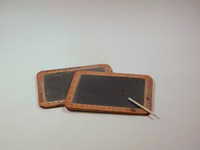
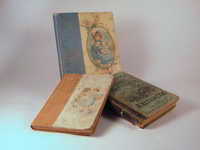
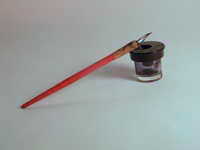
School items on display at the Scarborough Historical Society

School items on display at the Scarborough Historical Society

Today, students are regularly tested from kindergarten up until high school (as well as college if attended.) The tests are taken by the entire class at one time, quietly, and on paper or on the computer. There are no longer tests which determine admittance to high school, but the PSAT’s, SAT’s, and various others are important for students trying to get accepted into college.

Teachers
Abbie, grade 8

Scarborough teachers have changed greatly over the past years. The first school committee hired the town its first school master in March 1730. This school master taught alternately ¼ of the time at Black Point and then at Dunstan. In 1735 the town hired another school master, Robert Bailey. He was paid in lumber, a common form of pay at the time. By that time the school had one official school, this was in the Prouts Neck section of Black Point. Scarborough had difficulty attracting teachers, because of its rural wilderness. But by 1846 Maine State Legislature set up a Board of Education that paid the teachers’ salaries from common taxes and helped attract teachers.

In the 19th century the sole classroom teacher was usually an unmarried young woman, sometimes with students even older than herself. She would use the most basic resources, slate, chalk, and a few books. With these resources she would teach literacy, penmanship, arithmetic, and “good manners”, with recitation, drilling, and oral quizzes. Most teachers rotated living with local families.

As time went on schools required more teachers, and in 1877 Edmund Fogg taught a class of about 30 students at Scarborough High School. One year later another teacher, William G. Lord, was hired at the high school and was often praised for his ability to teach. With more students and more teachers the school system kept growing larger and larger. And now the approximately 75 teachers at Scarborough High School require special training and a degree. Now there are more subjects, which require more teachers, and different, more varied teaching methods.

Furniture
Anders, grade 8

19th century school desk on display at the Scarborough Historical Society

19th century school desk on display at the Scarborough Historical Society

Furniture in schools has changed much over time. In early schools, the students sat on three legged stools or long benches at narrow tables. These stools and tables were often made out of pine or oak boards by the students’ parents. By 1880, children sat in individual desks that were bolted to the floor, all facing towards the front of the room, and the teacher. Girls and boys sat on separate sides and the younger smaller children sat towards the front of the room, with the older larger children in back. Students rarely faced each other and had little interaction.

By 1930, most desks were portable, but were still used in the same way as the old desks and tables. However, in the 1960s, round tables became common to encourage students to work together. Today, portable desks and tables are common in schools. Interaction among students is expected and the teacher no longer is the center of attention, the learning is.

Blackboards
Amara, grade 7

Blackboards have evolved over the years but their function is still a part of many schools today. The first blackboard was used in a Philadelphia school in 1809. These early blackboards were made of pine and coated with a mixture of egg whites and carbon from charred potatoes. The students and teachers wrote on the boards with chunks of chalk and erased with cloth rags.

Soon, the slate board was invented and it was then that teachers switched to cylinders of soft white chalk -closer to what we have now- and felt erasers. These were easier to make, so instead of just one board in the classroom, each child was given their own. This made it a lot easier for teachers to teach their students because after she taught a lesson the students could practice it on their own. Chalkboards, as they were called because they came in green, continued to be found on the walls of many classrooms for many years.

These boards have progressed all the way to current day where we use whiteboards also know as dry-erase boards. These are much easier to write on and erase. They allow for colored markers, but still require felt erasers. Teachers use them everyday to write down assignments, correct homework, and teach new topics. White boards have become a big part of the school day and are an important tool in learning. Some classrooms even have SMART boards, interactive whiteboards that combine a whiteboard with a computer.

Part 1 Part 2Part 3Part 4


Posted in Black Point, Dunstan, Schools | Tagged , , | Comments Off on A Look Inside the Classroom Over Time – Part 1

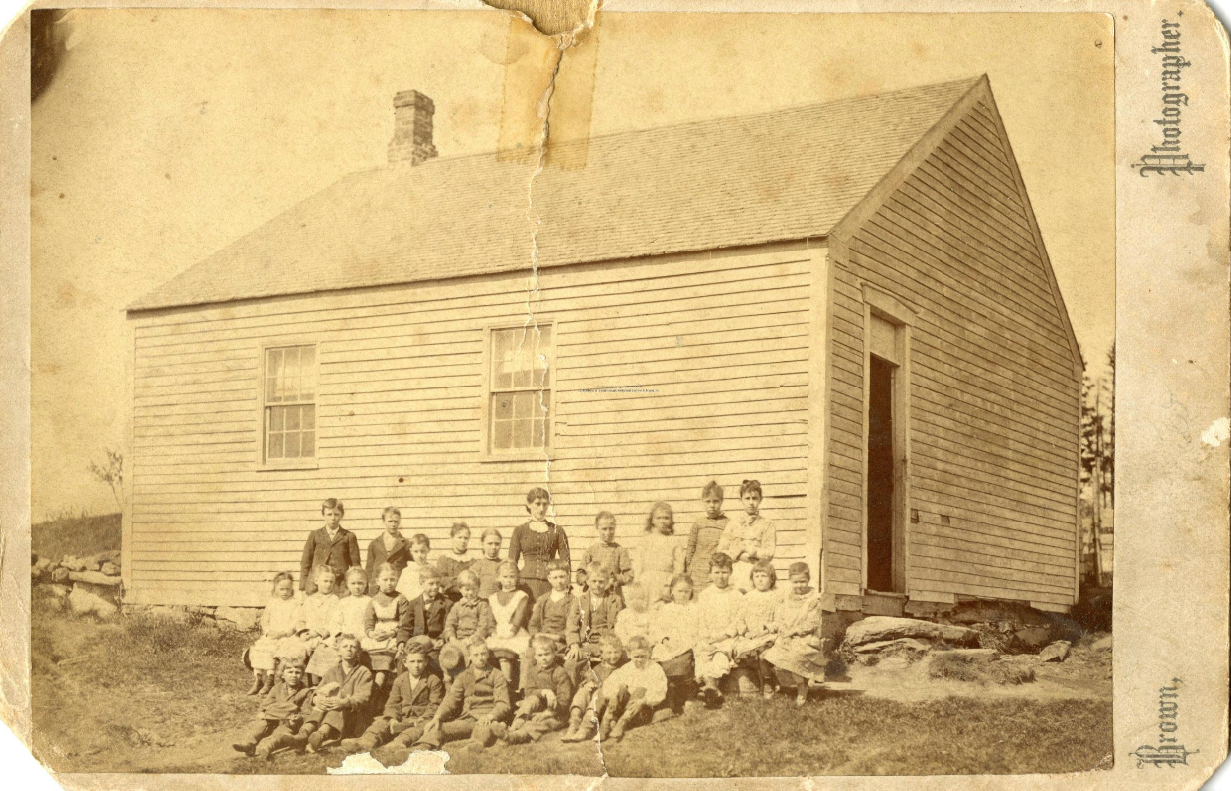
Beech Hill School, ca. 1879

Beech Hill School, Scarborough, ca. 1879

Beech Hill School, Scarborough, ca. 1879

This was a District 1 school located on the Pleasant Hill Road and Fogg Road intersection. It operated from 1790 to 1940. It later became a shed at the Prouts Neck Country Club.

Posted in Pleasant Hill, Prout's Neck, Schools | Comments Off on Beech Hill School, ca. 1879

They Answered the Call – Part 2

Part 2 of 2

by Mary Pickard

Images from Scarborough Historical Society, Maine Historical Society, and Maine State Archives

Clara Moses letter to soldier, ca. 1862

Clara Moses letter to soldier, ca. 1862

Letters to and from soldiers revealed concerns about the future. In a letter to her friend Gardner Waterhouse with the 7th Maine, Clara Moses cautioned, “Take good care of yourself as you can and take care of your money too, so when you some home you will have something to buy a farm.”

Melville Milliken, serving with the 12th Maine, in a letter to his folks, was concerned about a box of letters he sent home “to get rid of lugging them. He wrote, “and if I should ever get home I should like to keep them and if not they are of no use to anyone and will be destroyed.”

Cpl. Milliken letter to parents, Louisiana, 1863

Cpl. Milliken letter to parents, Louisiana, 1863

Many did not return from the war. Some died in battle: George E. Merrill, Battle of Fredericksburg, 1862; Henry Farr, Battle of Cedar Creek, Virginia, 1864; Robert Waterhouse, the Wilderness, 1864; Enoch Snow, Battle of Ponchatoula, Louisiana, 1862; and Mahlon Parker, Siege of Port Hudson, 1863.

Others died of disease: Martin Perry, 1863; Benjamin Waterhouse, 1863; and Charles Gustin, 1863. Some died in prison: Sumner Cummings Libby, Salisbury Prison, North Carolina, 1863; John Young, 1865.

Noah and Harriet Pillsbury, Scarborough, ca. 1910

Noah and Harriet Pillsbury, Scarborough, ca. 1910

Freedom Milliken was one who did return home and for many years was the Town Clerk of Scarborough. Noah Pillsbury, who became Scarborough’s first Rural Free Delivery mailman and toll taker for the Columbia Pike, the road across the Scarborough Marsh, also returned.

Thomas Libby, who had been held captive in a Confederate prison in Salisbury, North Carolina, became proprietor of the West Point Hotel at Prouts Neck.

Zebulon Knight, a carpenter, became minister of the South Berwick/Wells Christian Church beginning in 1875, remaining there for 43 years.

Horatio Hight represented Scarborough in the Maine House and later moved to Portland where he served many years as a weigher and gauger in the Customs House.

Zebulon and Ida Knight, Scarborough, ca. 1910

Zebulon and Ida Knight, Scarborough, ca. 1910

Charles C.G. Thornton, scion of a prominent Saco business family for whom Thornton Academy is named, became successful in the flour milling trade in Massachusetts and Wisconsin. Thornton also donated the church bell at the Black Point Congregational Church.

And Hiram Berry? He returned to farming and built a farm in the northwest section of Scarborough.

All of Scarborough’s soldiers are honored by the monument dedicated by Augustus Freedom Moulton in 1913. The principal inscription on the Soldiers Monument reads: “Scarboro/To Her Sons/Who Fought/For The Union.”

The monument was made possible through the efforts of the Outlook Club, a local women’s group that initiated the memorial project by holding an ice cream and bake sale to raise funds. The Scarborough Soldiers’ and Sailors’ Association formed, and the ladies held fundraising fairs and entertainments around town.

Augustus F. Moulton

Augustus F. Moulton

The monument was erected at the cost of $2,500: local donors and proceeds from fundraisers contributed $1,500 and the town gave $1,000. By the time of the dedication, the monument recognized not only Civil War soldiers but also those who served in the Revolutionary War and the War of 1812.

Augustus Moulton persuaded the Good Templars to move their meeting place from the site where the monument was to be erected to its present site next to the Dunstan Fire Station and the Scarborough Historical Society. It is now the Gov. William King Masonic Lodge.

Soldiers' and Sailors' Monument, Scarborough, 1950

Soldiers’ and Sailors’ Monument, Scarborough, 1950

Nearly 100 years after the monument’s dedication, the town and State Department of Transportation announced plans to reconfigure the busy intersection next to the monument, necessitating its relocation.

At a 2011 town hearing, residents weighed in with their opinions and the message was clear — for historical reasons and tradition, don’t move the monument. Plans were changed and the Soldiers’ Monument remained in its original location at the corner of Broadturn Road and Route 1 in Dunstan.

Posted in Dunstan, They Answered the Call | Tagged , , , , , , , , , , , , , , , , , , , , | Comments Off on They Answered the Call – Part 2

They Answered the Call – Part 1

Text by Mary Pickard

Images from Scarborough Historical Society, Maine Historical Society, and Maine State Archives

Civil War recruiting broadside, 1861

Civil War recruiting broadside, 1861

To Arms! Citizens! Our Country Calls!! Come on sons of Maine! Our brethren are already in the field; why stand we here idle! Now is the time! Best chance yet offered!

An October 1861 Civil War recruiting poster used peer pressure to urge able-bodied men of Scarborough to join their brethren already in the fray. The poster also implied that benefits of signing up immediately would be better than previous offers. The recruiting officers, Charles C. G. Thornton and Horatio Hight, were Scarborough men.

Most of Scarborough’s townspeople were staunch supporters of the Union, and appeals to enlist in Civil War regiments were taken seriously. Brothers, cousins, friends and neighbors answered the call. Among them were many from the Libby, Milliken, Pillsbury, Coolbroth, Rounds and Waterhouse families.

Hiram Berry enlistment receipt, Scarborough, 1864On October 19, 1861, at the age of 18, Hiram Berry enlisted as a private in the Co. C of the 12th Maine Infantry. This document acknowledges Berry's receipt of $200 for enlisting on the quota of the town of Scarborough. Johnson Libby signed with receipt, with Horatio Hight and Freedom Milliken, who were fellow Scarborough volunteers, witnessing the signing. After serving three years with his regiment and taking part in many Civil War battles, Berry was mustered out on March 14, 1864 at Camp Parapet, Louisiana. He re-enlisted immediately in the same company and regiment serving until he was discharged on April 18, 1866 in Savannah, Georgia. Hiram Berry was born on August 15, 1843 in Scarborough to Ruth Berry. After the war, Berry became a carpenter and farmer. He married Edith May Storey on September 28, 1895 in Gorham. Hiram was was 53 and Edith was 21. They had 10 children and he loved growing roses. Berry died in Scarborough on January 8, 1915 and is buried in Dunstan Cemetery.

Hiram Berry enlistment receipt, Scarborough, 1864

Charles Thornton, Auditor of Accounts for Scarborough, resigned his office on October 19, 1861 and enlisted on November 15, 1861.

Berry family legend tells of young Hiram, a Pillsbury family handyman, who met a Union recruiter when sent for water one day. Hiram enlisted on the spot and never returned with the water, but instead went off to war.

At the dedication of the Soldiers’ Monument in Dunstan in 1913, the Hon. Augustus Freedom Moulton remarked: “During the Civil War no town and no place surpassed the patriotic record of old Scarboro. Every quota was promptly filled. Every requisition was promptly met. The town was depleted of its young men. In all the great battles in the East, Bull Run, Fredericksburg, Antietam, Gettysburg and the rest the men from Scarboro took part, and in the far South, New Orleans, Port Hudson and Red River and elsewhere our boys were present and did their duty.”

Town Warrant, Scarborough, 1861

Town Warrant, Scarborough, 1861

While not unique in its response, Scarborough did meet every quota. In all, approximately 240 men from the town, which had a population of about 1,600, answered the call and served in the war.

This number included some men from other towns who signed on to fill Scarborough’s quotas and receive bounty money. Others signed on as substitutes for Scarborough men and received a commutation fee, as did Joseph Coy of Portland, a substitute for Simon Libby of Scarborough.

During the war years, town warrants seeking approval for monies needed to pay bounties, commutation fees, and support of soldiers’ families were posted in the stores of Freedom Milliken, Joseph Sherman and John Higgins.

Town meeting notice, Scarborough, 1861

Town meeting notice, Scarborough, 1861

The Town of Scarborough Annual Report, March 1863—March 1864, recorded some of these expenditures. Twenty men, three-year volunteers, were mustered in from May 25, 1862 to July 7, 1863 at a cost of $125 bounty per man, or $2,500.

Under the call for nine-month volunteers of August 4, 1862, the quota of 20 men was met again at a cost of $125 bounty per man, or $2,500. The Scarborough quota for the call of October 17, 1863 was for 40 men.

Of this group, 33 volunteered, one was drafted, 5 furnished substitutes, and 5 paid commutation, leaving Scarborough a credit of 4 men toward a future call. The 33 men were paid a bounty of $310 each; the other 11 were paid $300 each. Anticipated calls and expenses for the following year were also reported.

Posted in They Answered the Call | Tagged , , , , , , , , , | Comments Off on They Answered the Call – Part 1