King, William – Maine’s First Governor

People Who Called Scarborough Home

By Charlene Fenlason

William King

William King

William King

William King, son of Richard King and Mary Black King, was born 9 February 1768 in Scarborough. When he was thirteen, William was sent to Phillips Academy in Andover for a term, but other than that experience he had little formal schooling. He was largely self-educated and a self-made man. After working first as an apprentice at a sawmill in Saco, William joined his sister Elizabeth and her husband Dr. Benjamin Porter in Topsham, where they opened a store and lumber and shipbuilding business. Beginning in 1795, he became active in local politics, representing Topsham in the Massachusetts General Court. William lived with the Porters in Topsham until 1800 when he married Ann Frazier of Boston and relocated to Bath. After the move to Bath, William represented that town in the Massachusetts General Court in 1804 and also served twice as state senator for Lincoln County.

When the War of 1812 broke out, William served as a major general in the militia in charge of the Maine district. Also, as a colonel in the United States Army, he led recruiting efforts for the regular army. During the war, he was particularly concerned with coastal shipping and defenses in the District of Maine. Noting the hardships Maine had suffered, he began a seven-year effort toward statehood that began with a petition to Massachusetts for separation. He realized his goal when Maine was recognized as a state on 15 March 1820. Elected the next month as the state’s first governor, William served until May 1821 when President Monroe named him as a special minister to negotiate a treaty with Spain. Three years later William returned home to private life. In spite of his limited schooling, he was a trustee of Waterville (now Colby) College, a trustee and overseer of Bowdoin College, principal owner of Maine’s first cotton mill in Brunswick, and a founder and president of Bath’s first bank. William died at home in Bath on 17 June 1852.

Sources

Moulton, Augustus. Grandfather Tales of Scarborough. Portland, ME: Katahdin Publishing Co., 1925.

Smith, Marion Jacques. General William King: Merchant, Shipbuilder and Maine’s First Governor. Camden, ME: Down East Books, 1908.

Posted in People, People who Call Scarborough Home | Tagged , | Comments Off on King, William – Maine’s First Governor

King, Rufus – Continental Congress

People Who Called Scarborough Home

By Charlene Fenlason

Rufus King

"Rufus King" by Gilbert Stuart

“Rufus King” by Gilbert Stuart

Rufus King, the first child of Richard King and his wife Isabella Bragdon, was born 24 March 1755 in Scarborough. He was a half-brother of William and Cyrus King. After attending Dummer Academy, Rufus graduated from Harvard College in 1777. In 1778, he served in the Continental Army in the Rhode Island campaign as aide-de-camp to General John Sullivan. After his service, Rufus studied law with Theophilus Parsons in Newburyport. He was admitted to the bar in 1780 and became a member of the Massachusetts General Court. In 1784 Rufus was elected to represent Massachusetts at the Continental Congress. As a delegate to the Federal constitutional convention in Philadelphia, he served on a subcommittee that prepared the final draft of the U.S. Constitution. Rufus was a prominent opponent of the extension of slavery in the colonies.

Rufus King relocated to New York City two years after his 1786 marriage to Mary Alsop, daughter of wealthy New York merchant John Alsop. He became a member of the New York assembly and then was elected to the United States Senate, resigning in 1796 to become United States Minister to Great Britain. In 1804, he was an unsuccessful Federalist candidate for Vice President of the United States. Rufus again was elected to the United States Senate in 1813 and reelected in 1819. While serving in the senate, Rufus worked on the Missouri Compromise that permitted Maine to enter the Union as a free state. In 1816 he was an unsuccessful candidate for both Governor of New York and President of the United States. He served once again as United States Minister to Great Britain 1825-1826. With his health failing, Rufus returned to his home in New York where he died 26 April 1827.Sources

Ernst, Robert. Rufus King: American Federalist. Williamsburg, VA: The University of North Carolina Press, 1968.

Moulton, Augustus. Grandfather Tales of Scarborough. Portland, ME: Katahdin Publishing Co., 1925.


Posted in History, People, People who Call Scarborough Home | Tagged , | Comments Off on King, Rufus – Continental Congress

King, Richard – Dunstan Settler

People Who Called Scarborough Home

By Charlene Fenlason

Richard King

Richard King House, Dunstan Landing, Scarborough, ca. 1930

Richard King House, Dunstan Landing, Scarborough, ca. 1930

Richard King, born in 1718 in Boston, settled in the Dunstan Landing area of Scarborough in 1746 after selling property in Watertown, Massachusetts where he’d had a successful timber exporting business. Richard bought 3,000 acres of land in Dunstan, which was divided into several farms. A successful merchant, he was also a farmer, owner of trading vessels and a town justice. The King home, built across from the marsh, was originally a one-story structure, added onto as King’s finances and family grew.

On 20 November 1753, Richard married Isabella Bragdon, by whom he had three children: Rufus, Mary, and Paulina. Isabella died 19 October 1759. Three years later on 31 January 1762, he married Mary Black, a cousin of Isabella’s. Six more children were born to this union, two of whom were William and Cyrus. Three of Richard’s children, Rufus, William, and Cyrus, became major public figures.

The King family prospered before the Revolutionary War. Suspected of having Tory sympathies, Richard was harassed by the Sons of Liberty and his house and financial records destroyed. Richard King died on 27 March 1775 on the eve of the Revolution.

Source

Moulton, Augustus. Grandfather Tales of Scarborough. Portland, ME: Katahdin Publishing Co., 1925.

Posted in Dunstan, People, People who Call Scarborough Home | Tagged , , | Comments Off on King, Richard – Dunstan Settler

Kaler-Vaill, Addie – Devoted to Community

People Who Called Scarborough Home

By Charlene Fenlason

Addie Kaler-Vaill

Addie Kaler-Vaill, Scarborough, ca. 1945

Addie Kaler-Vaill, Scarborough, ca. 1945

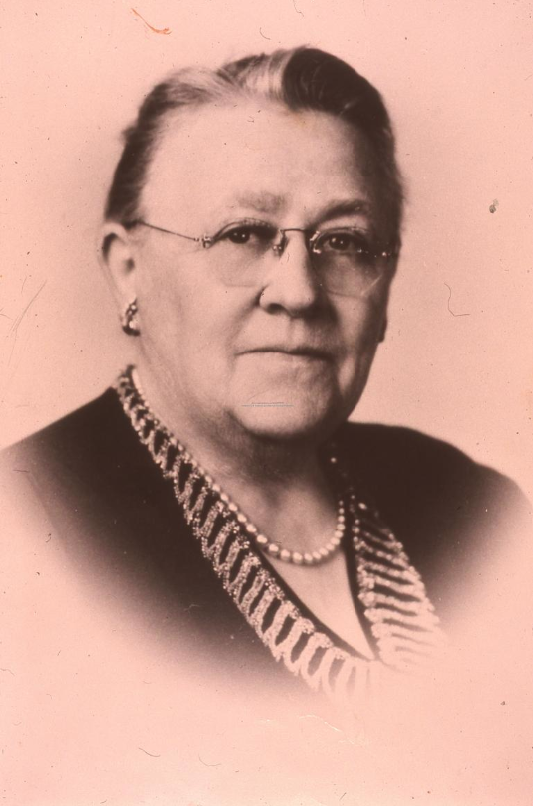
Addie Kaler-Vaill was born in 1878 to a well-known Scarborough family. She devoted her life to family and the community. Addie was involved with the public library, and she also served on the committee that erected the Soldiers Monument in Dunstan. She was chosen to unveil the statue before the largest crowd ever assembled in Scarborough. In 1936, she financed the tomb at Black Point Cemetery and established a trust fund to provide perpetual care for the entire cemetery. She also made generous contributions to the Black Point Congregational Church. Her greatest legacy was the establishment of a home for up to fifteen women residents that she and her husband, Edward Vaill, a prominent Portland businessman, had envisioned and planned. After her death in 1957 at the age of 79, her residence at 382 Black Point Road was expanded and the Kaler Vaill Memorial Home for Women was opened in 1960.

Source

Laughton, Rodney. Scarborough in the Twentieth Century . Portsmouth, NH:Arcadia Publishing, 2004.

Posted in Black Point, People, People who Call Scarborough Home | Tagged , | Comments Off on Kaler-Vaill, Addie – Devoted to Community

Litchfield, Lewis L. – Station Agent & Hobbyist

People Who Called Scarborough Home

By Charlene Fenlason

Lewis Litchfield

Lewis Litchfield, station agent for the Boston & Maine Railroad in the early 1900s, was born in 1871. He was a station agent first at Pine Point and later at Oak Hill. Because he felt it was his duty to care for his invalid mother, it wasn’t until he was sixty-one that he married Stella Langford of Rochester, New Hampshire.

Lewis Litchfield, Scarborough, ca. 1958

Lewis Litchfield, (on left)  Scarborough, ca. 1958

As a hobby, Litchfield made high-quality bamboo fishing rods and violins. People said to have had a Litchfield fishing rod were Henry Ford, William R. Hearst and the Duchess of Windsor. A news story in the September 1, 1938 Christian Science Monitor reported that two of Litchfield’s violins were taken to the North Pole by Arctic explorer Donald B. MacMillan, a school friend of his. In 1897, he played one of his violins, made from parts of an old schoolhouse that had been on Ross Road, at the high school graduation in the Town Hall. He continued to play at the high school for over fifty years, accompanied by pianist Addie Kaler Vaill. Winslow Homer made a sketch of the violin and gave it to Mrs. Vaill who was offered a substantial sum for it. The same violin received second prize at a contest in St. Petersburg, Florida, and was later exhibited on television. In 2007 the Scarborough Historical Society acquired one of Litchfield’s violins and had it restored to playing condition. Dr. Robert Lehman, director of the strings program at the University of Southern Maine, has since performed two concerts with the violin. Quoted in an article in the Kennebec Journal Dr. Lehman said, “Ninety-nine percent of the violins made in America at the turn of the century were European. The fact that this man was able to make a classical violin without formal training and using regular carpenter’s tools is astonishing.”

Litchfield retired as a station agent at Candia, New Hampshire in 1941 and received a golden pass for his fifty years of service. Summers were spent living alone and winters with relatives in New Hampshire. In 1961, Litchfield celebrated his 90th birthday at his niece’s home in Blue Point. He died in 1963 at the age of 92 and is buried in Freeport.

Source

Scarborough Historical Society and Museum File: Lewis Litchfield

Posted in Blue Point, Oak Hill, People who Call Scarborough Home, Pine Point | Tagged , | Comments Off on Litchfield, Lewis L. – Station Agent & Hobbyist