
Nestled along the scenic Cape Shore Drive near Scarborough’s Spurwink River stood a humble shack with a simple sign: “Clams.” For over a decade, Ivory Kilborn lived and worked there, earning a reputation as a master digger and shucker of clams—the finest clams that the clean, sandy flats of the Spurwink could provide. In an era when coastal clamming was both a livelihood and a tradition, Kilborn embodied the independence, hard work, and community spirit that defined life in Scarborough. This article from the early 20th century provides a vivid glimpse into Kilborn’s daily life, his booming clam business, and the enduring charm of Scarborough’s shoreline culture.
(This article was taken from the Lewiston Journal, Magazine Section, front page, April 4, 1925.)
The Life of a Clam Digger on the Spurwink
By Alfred Elden
[Written for the Lewiston Journal.]
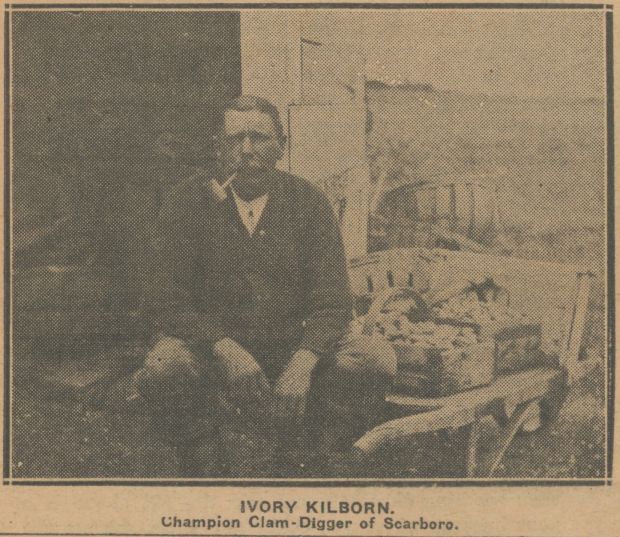
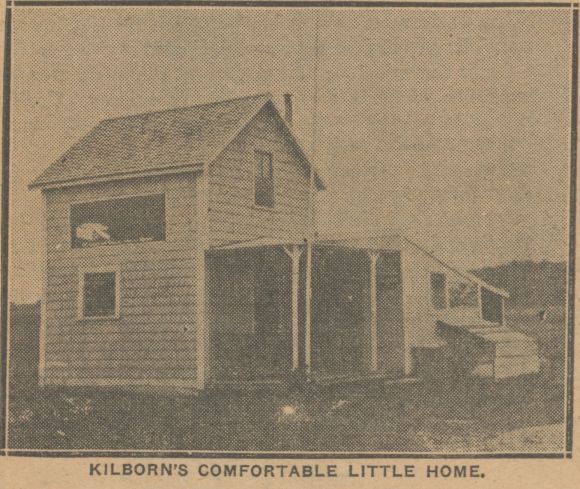
Just before coming to ‘Mitchell’s erstwhile famous roadhouse, on the popular Cape Shore Drive a house closed, this year, but noted for half a century for its shore dinners, down thru the fields toward the glistening Spurwink River, there stands a little building. There is a grassy driveway to it from the road and at the entrance a plain sign in black and white bears the single word “Clams.” But that sign means a lot to these who have made the acquaintance of Ivory Kilborn, the proprietor and occupant of the little house. It means that there they can get the real thing in clams.
And to the visiting motorist there is something about that sign that gives him pause and finally induces him to turn his car into the driveway. The entire picture is suggestive of the fact that here one may find clams that are clams. If it is low tide there is the clean, sandy bed of the Spurwink River, a shimmering, winding estuary, which twists itself around a wooded peninsula a half mile distant and then merges its waters with those of the open Atlantic at the very easterly end of Higgins Beach.
Here, surely, one will find clams free from the taint of sewer and rubbish infected flats, clams of the variety of those that generations ago made Scarboro famous.
And thousands upon thousands who have bought clams of Ivory Kilborn have found their expectations fully realized. For twelve years summer and winter this clam man has lived most of the time absolutely alone in his little house. It is as scrupulously clean as the inside of one of Uncle Sam’s lighthouses, for Kilborn has the time and ‘the inclination to keep things neat. There is a small living and sleeping room combined, altho during the day the couch bed gives no indication of the use to which it is put at night. There is a smaller kitchen and, until this year, that was all. Seeing the possibility or augmenting his clam business with a side line Kilborn added another room where he keeps cool drinks, cigars and cigarets. He also changed the location of his front door and enlarged the piazza. In a little shed-like inclosure at the rear he shucks out his clams.
“Yes,” admitted Kilborn to a question, “I have lived here all alone for a dozen years. Get lonesome in winter? Bless you, no! There are plenty of neighbors back up the road there. I call on them and they call on me. We play cards, listen to talking machines and even radio just as you folks in the city do. As long as we get a decently open winter I don’t mind it. But one like we had two years ago! Whew! I think I’d move into town if I thought we would have another one. Everything was frozen up, even the river here clear to its mouth and it is some cold winter when it will do that. Couldn’t clam, couldn’t do anything except shovel a path to the road, pile fuel on the fire and read and smoke. This winter wasn’t so bad and last winter—why, a man could work half the time in his shirt sleeves. I dug clams almost every day and sent them into market by a neighbor who called for them.
Asked where he got his clams and how many he dug brought forth some interesting information from Kilborn.
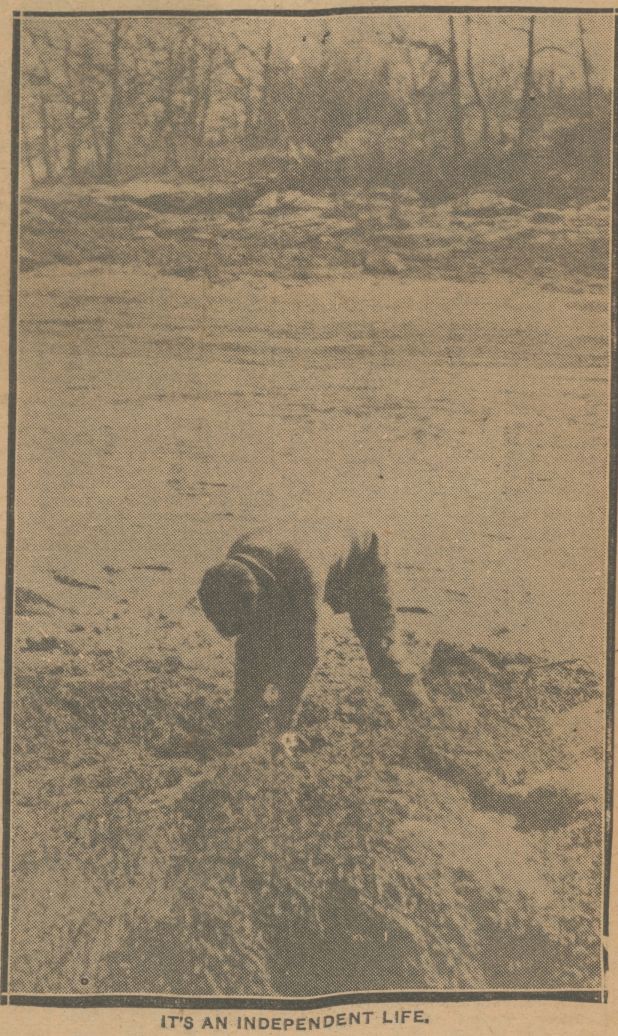
“I dig ’em all from a point opposite Mitchells to the mouth of the river. Not more than a quarter of a mile, I should say. Getting scarce? Bless you, no. I been digging ’em winter and summer for 12 years and I don’t see but there are just as many as there ever were. I don’t plan to take anything less than two and a half inches and most of them go bigger than that. They tell me and f’m my observation I guess it’s right, that a clam will grow from the seed to full size in about three years. And there’s a lot of clams in the Spurwink here.
“They really are wonderful good ones, too. Better than those they get out of the Nonesuch River beyond here, meatier and a little sweeter, I think.”
In reply to a query as to whether he ever sold as much as a bushel a day to passing automobllists, Kilborn looked up quizzically and then, seeing that the question was asked in good faith, laughed as he answered:
“Of course this isn’t a clam factory but I average more than five bushels a day and on Sundays I sell between twenty and thirty bushels. Dig ’em alone? Generally, altho I’ve got a feller helping me during the rush months last summer. But I’ve dug from four to six bushels lots of days. A good many folks buy clams for steaming but there’s also a bunch of ’em likes ’em fried or made into stews so I have to do a lot of shuckin’. A bushel of clams such as I get will shuck out just twelve full, solid quarts ”
A little mental computation here Indicates possibilities in Kilborn’s industry. Accepting his minimum of five bushels a day. Supposing he shucks out half of that amount. If each bushel nets 12 quarts of clams that would mean six quarts of shucked bivalves per bushel or thirty quarts a day. At 40 cents a quart that would total $12. Then there are the other half of the day’s dig sold for steaming at 40 cents a peck, four pecks to the bushel, and Sundays when twenty to thirty bushels are sold, and—but what’s the use! Kilborn is naturally not giving out many statistics, but living expenses can’t be very great in the little house and the upkeep of a small skiff and a few clam rakes and baskets isn’t overwhelming. So it is fairly sure that he isn’t worrying about any wolf sneaking across the flats and in thru his back door.
Possibly this line of reasoning is what induced two yeggs to sneak up on him one dark night two years ago, knock him unconscious and escape undetected with his roll of more than $100. That taught him not to keep money in the house with him for its location is just far enough from the neighbors so as absolutely to isolate him at night.
“If I cared for gunning I could get plenty of black ducks, old squaws, coots, sheldrakes, whistlers and the other varieties in the fall,” said Mr. Kilborn. “Right across the river there, back of the woods is Great Pond. That’s where the Great Pond Gun club is. Lot of city folks from Boston and New York own it and have the rights to the shooting. They get a heap of birds. It’s a wonderful place, too, for pond lilies. One chap makes a pretty penny during the summer getting lilies and taking them in to Portland where he sells them on the street or around at the houses.”
Not such a bad life in summer, for the little clam house really occupies a charming site and in fair weather every few minutes brings customer-vistors. And even in winter, unless, as Kilborn said, it happens to be too bitter, it might be much worse. After all this clam man is absolutely independent and making all he needs. What more can mortal ask?